
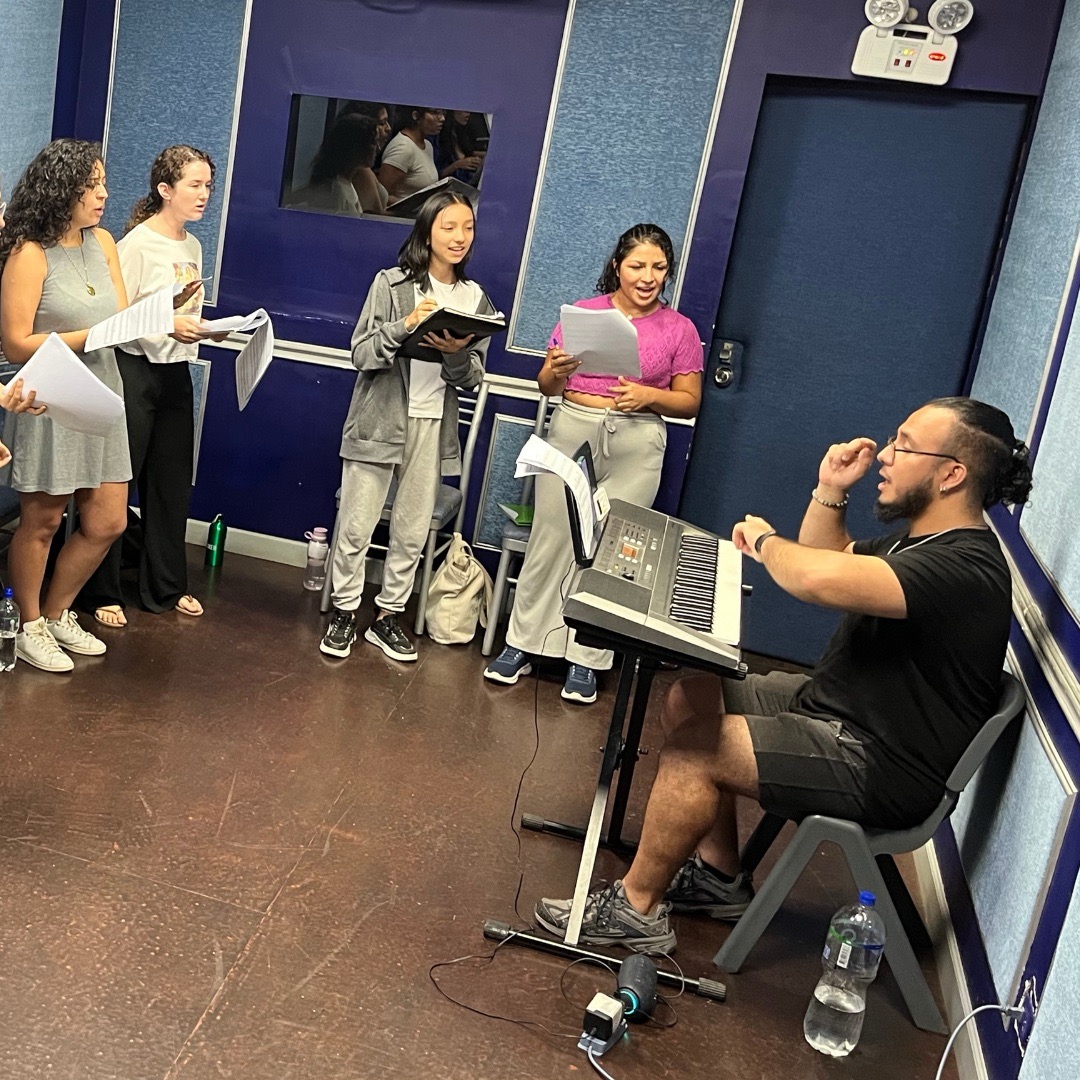

In musical theater, as is well known, performers specialize in 3 areas: Acting, Dance and Music. Through their voices, actors not only tell the story but also bring dynamism and personality to the characters they portray, setting the tone for the musical. This applies not only to the lead actors but also to the ensemble, another crucial part of the show. It is essential to emphasize that the quality of the show depends on the preparation of its members, both in terms of stage presence and vocal ability. In this instance, we will focus on the vocal aspect, exploring why its study is important in musical theater.
According to Parias, singing is the central element of musical theater, as it is considered the ideal way to merge the various musical genres within the show as well as serving as a means to convey the emotions, thoughts, and events of the story (2009, p. 4). Given this, it becomes more evident that ensembles must have extensive vocal training. Broadway shows encompass a myriad of techniques and styles, presenting a challenge for the cast who must be equipped with all possible tools to perform optimally.
The vocal technique used in musical theater revolves around several essential aspects for proper performance in a musical, which include:
- Having an agile and flexible voice, meaning a wide vocal range (Parias, 2009, p. 10).
- Mastery of vocal/laryngeal mechanisms, such as chest voice, head voice, and mixed voice (Parias, 2009, p. 10), as well as specific techniques like belting, which is commonly used in musical theater. It is important to note that belting requires extensive practice and knowledge of the instrument, so it should only be used by those who are properly trained (Universidad Sergio Arboleda, n.d., para. 8). belting, muy usada en el teatro musical. Sobre esta técnica, conviene recalcar que requiere de mucha práctica y conocimiento a nivel de instrumento, por lo que su uso debe darse únicamente por personas capacitadas a ese nivel (Universidad Sergio Arboleda, s.f., párr. 8).
- Understanding the physical aspects of singing, such as breathing, posture, and relaxation (Muente, 2021, p. 5).
- Managing resonance to facilitate control over different vocal colors needed in the performance, dynamics, and vibrato; this contributes to the versatility of the singer (Parias, 2006, p. 13).
In addition to the above, another foundational element of performing in musical theater is emotional expression. Our vocal director and singing teacher, Benjamín Iglesias (2024), states:
«La técnica vocal y la calidad de la interpretación vocal pueden realzar o contradecir la actuación. Un actor que entiende cómo usar su voz para expresar la emoción del momento, ya sea a través del tono, el ritmo o la dinámica, fortalecerá la conexión emocional con el público.»

This statement reinforces the importance of both lead actors and the ensemble having at least a basic understanding of singing in general. Moreover, it is worth mentioning that vocal technique can add value to performancesby integrating all scenic disciplines to create more detailed character portrayals, considering everything from physicality to spoken and sung voice, tailored to each character’s personality (Iglesias, 2024).
In conclusion, it is evident that several elements are required to develop a well-rounded performer, especially when it comes to a group, such as an ensemble, where each member must have the same level of artistic preparation. Finally, the study of vocal technique is essential for musical theater casts, as it provides artists with the ability to blend cleanly and uniformly in order to create a high caliber show.
Would you like to know more about our Vocal Ensemble for Musical Theatre Courses? Find more information here.
References
- Escobar, A. (s.f.). Consejos para mejorar tu técnica vocal en el arte dramático. ESAEM. https://www.esaem.com/noticias/consejos-para-mejorar-tu-tecnica-vocal-en-el-arte-dramatico/#:~:text=Importancia%20de%20la%20t%C3%A9cnica%20vocal%20en%20el%20teatro&text=Principalmente%20lo%20que%20los%20actores,sean%20convincentes%20para%20el%20espectador.
- Muente, S. (2021). Canto para la Escena I – EA113 – 202102. Repositorio Académico UPC. https://repositorioacademico.upc.edu.pe/bitstream/handle/10757/662797/EA113_Canto_para_la_Escena_I_202102.pdf?sequence=1&isAllowed=y
- Parias C. (2009). El Canto en el Teatro Musical. [Tesis de licenciatura, Pontificia Universidad Javeriana]. Repositorio Institucional Javeriano. https://repository.javeriana.edu.co/bitstream/handle/10554/4371/tesis119.pdf?sequence=1&isAllowed=y
- Universidad Sergio Arboleda (s.f.). La voz en teatro musical. https://www.usergioarboleda.edu.co/noticias/la-voz-en-teatro-musical-estudiar
- Photos and clips of Spotlight’s classes. Spotlight Performing Arts intellectual property.
Photos and clips of Spotlight’s classes. Spotlight Performing Arts intellectual property.