
Want to Help a Young Person with Anxiety? Start with a Scene, Not a Speech
Youth anxiety in Lima is rising, and families are feeling it. According to Peru’s Ministry of Health (MINSA), 29.6% of adolescents between the ages of 12 and 17 are at risk of experiencing mental or emotional health problems, including anxiety and depression (MINSA, 2021).
Parents see it in their kids: quiet withdrawal, trouble sleeping, emotional outbursts, or lack of motivation. And youth feel this without knowing where to turn.
But what if one of the most effective tools to help young people cope with anxiety has been hiding in plain sight?
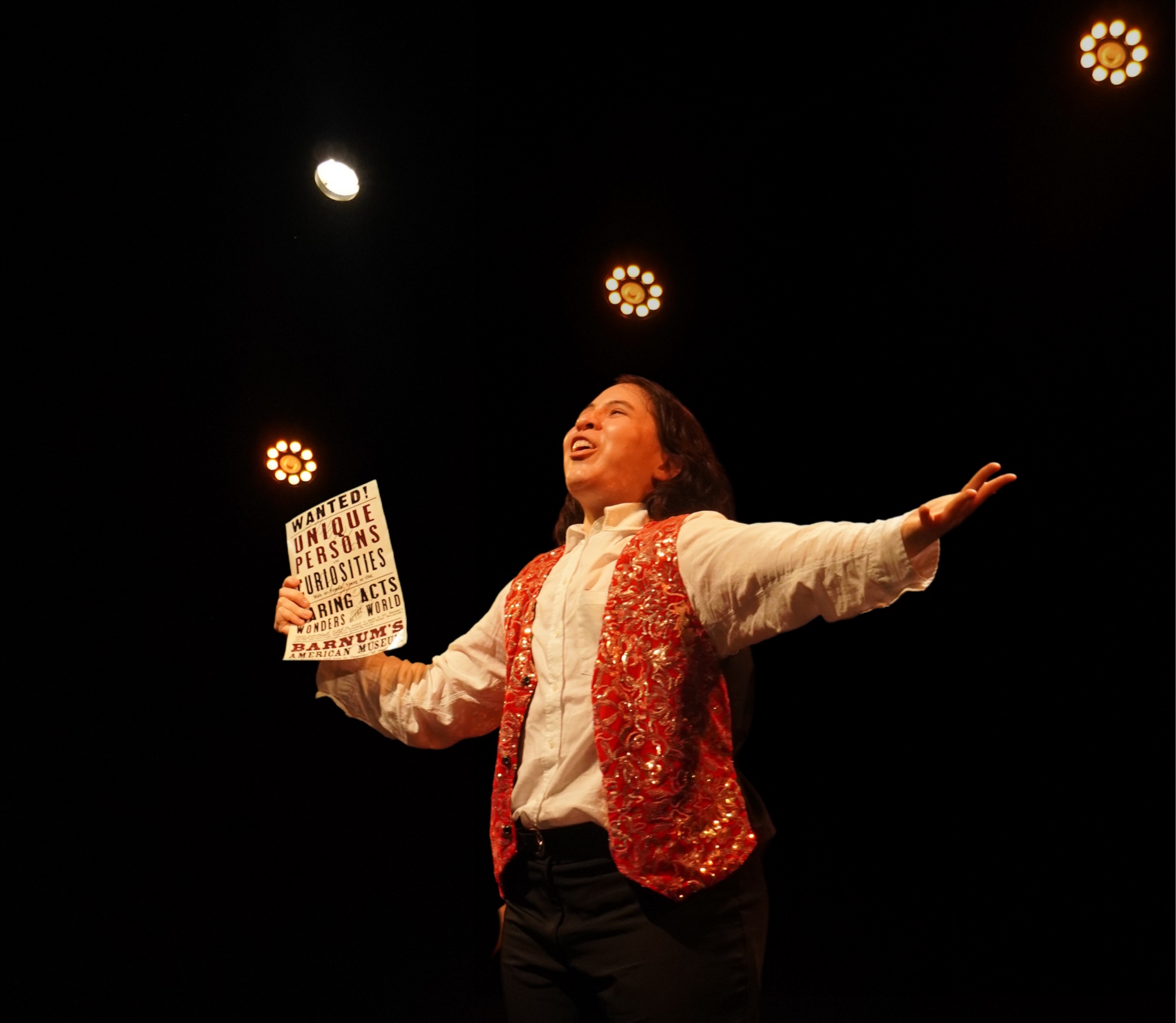
At Spotlight, we’ve spent the past seven years reflecting on how musical theater offers a critical training ground for building youth’s resilience, a key factor in overcoming anxiety and mental health challenges.

Movement, Music, and Mental Health
Musical theater brings together singing, acting, and dance, all practices that activate both the mind and body.
- Singing strengthens the breath-body connection. Controlled breathing can reduce anxiety by activating the parasympathetic nervous system, which calms the brain.
- Dancing helps release physical tension and encourages brain-body integration. This kind of physical play improves mood, focus, and emotional regulation.
- Acting gives students the chance to take emotional risks in a safe space, helping them build confidence, empathy, and adaptability.
And perhaps most importantly, musical theater makes it safe to try... and fail.
Failure Is Not a Problem. It’s the Point.
One of the most important things musical theater teaches is how to fail and still keep going. AKA, build resilience.
In many school settings, failure is often treated as something to avoid. Students are judged by high-stakes standardized exams. A wrong answer can feel like a permanent mark. Many teens begin to associate failure with shame early on, which may lead them to develop a fear of making mistakes, or worse, avoid challenges altogether.
In musical theater, students forget lines, miss cues, sing off-key, or stumble through choreography. And then they come back the next day and do it again, and improve little by little. In this way, the theater space offers a way to normalize failure, offer honest but constructive feedback, and celebrate incremental learning over knowing all the answers. In this way, the theater space offers a way to normalize failure, offer honest but constructive feedback, and celebrate incremental learning over knowing all the answers.
Instead of “You didn’t get it,” or “that’s the wrong answer,” students hear: “Try again. Let’s figure it out together.”
This style of learning has the potential to rewire young people’s response to fear. Instead of shutting down, they adapt. They build emotional resilience, grit, and the ability to face challenges without giving up…all while having fun!

The Arts Are Not a Nice-to-Have
At a time when everything feels uncertain, the performing arts are not a “nice-to-have.” They are essential. We are preparing young people for a world that is changing fast.
By the time today’s teens enter the workforce, many of the technical skills they learn now will be outdated. What will matter most is their ability to adapt, communicate, think critically, collaborate, and lead with creativity and empathy.
Musical theater builds all of this. It teaches presence, flexibility, problem-solving, and emotional strength. It helps students take risks and recover. It invites them to be fully themselves.
For anxious youth trying to find their place in a rapidly changing world, the arts offer a place to belong and the potential for real transformation.
Structured Play That Builds Resilience
One of the most overlooked aspects of musical theater is how it turns learning into something active, social, and meaningful.
Musical theater is one of the few spaces where fun, discipline, emotion, and creativity come together in a structured way.

Students typically rehearse, revise, and collaborate toward the shared goal of a collective performance for an audience. They face real stakes, and they begin to understand that what they contribute to the group matters.
This is the kind of experience that helps young people take ownership of their learning.. They’re working toward something that feels real, guided by purpose and driven by curiosity.
In fact, the Harvard Center on the Developing Child emphasizes that play-based learning helps build the brain’s core architecture for resilience, adaptability, and emotional well-being.
For youth who are struggling with anxiety, this type of creative structure can be a game-changer. It offers a chance to engage fully, physically, emotionally, and socially, in a space that supports growth while still pushing for excellence. It is unlike any traditional learning environment.
A Way Forward
Whether you're a parent looking to support your teen or a young person searching for a way through your anxiety, here’s what we’ve seen work with our students at Spotlight: Young people should challenge themselves through something creative and demanding, something that forces them to move, speak, perform, and collaborate, especially when they feel uncomfortable.
Here’s our challenge to you: do one thing that you find difficult. Learn choreography that doesn’t come easily. Stand up and sing in a language you’re still figuring out. Rehearse a scene that asks you to speak clearly, even when your voice shakes. Work with others, even when you’d rather hide in your room and scroll through social media! scrolleando en tus redes sociales.
At Spotlight, we create space for young people to do hard things in a way that feels real, supportive, and meaningful. Not to impress anyone (except yourself!). Not to be perfect. But to face what’s challenging and come out stronger for it.
If that sounds like something you’d like to try, join us!